One of the most common phrases women hear after a divorce is, “Just give it time. Time heals all wounds.”
I understand why people say it. But in my work with separated and divorced women through Manasvi Healing, I see the same pattern again and again. Time can soften the intensity of pain, but time alone does not heal the emotional, mental, and personal challenges that follow the end of a marriage. Many women discover that months or even years after their divorce, they still feel stuck, hurt, angry, confused, or disconnected from themselves.
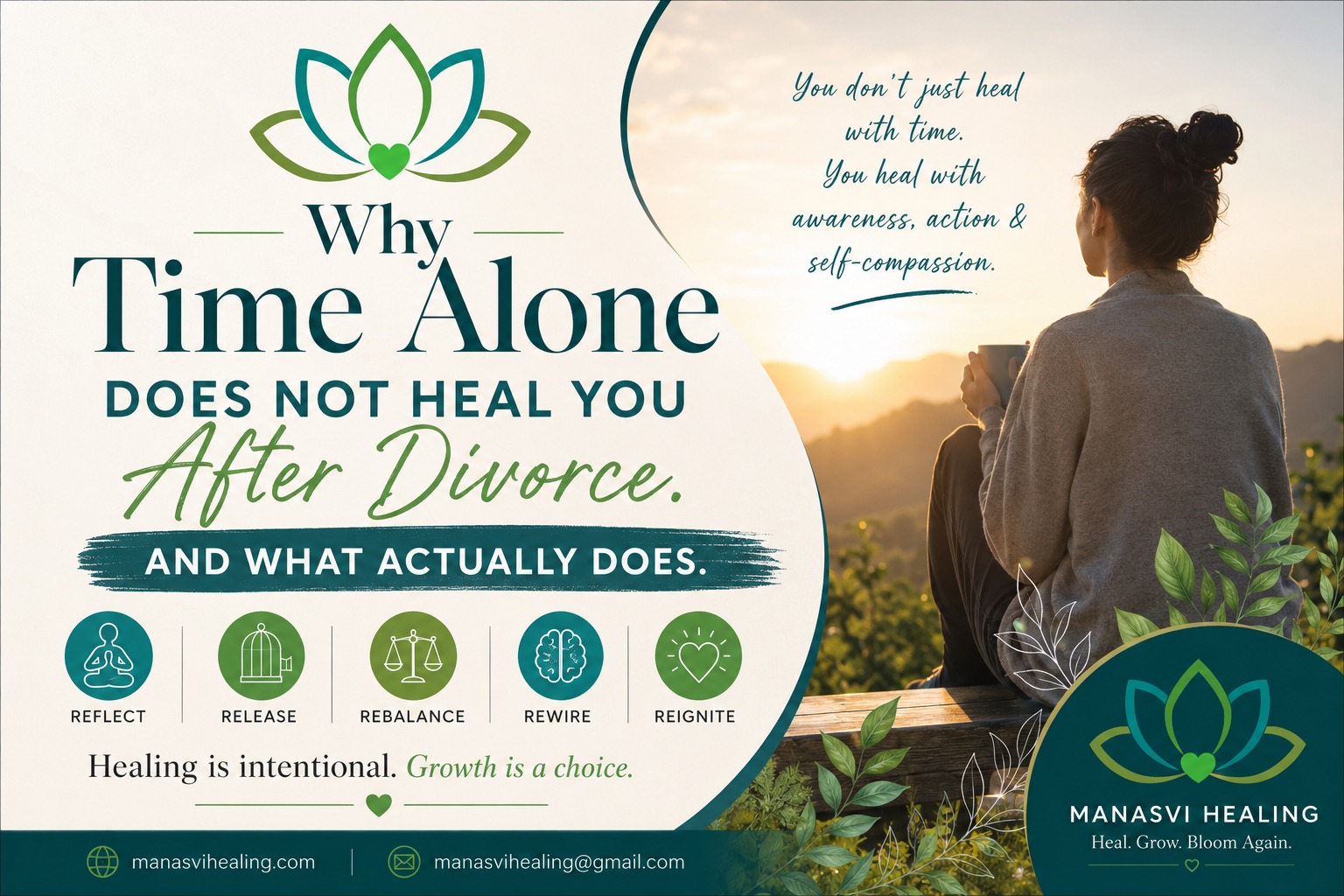
Healing is not something that automatically happens with the passing of time. Healing happens through intentional actions, self awareness, and personal growth. Time creates the space for healing, but it is what you do within that time that truly makes the difference. This is the whole premise behind the 5R Framework I use with the women I coach: Reflect, Release, Rebalance, Rewire, Reignite.
Imagine breaking a bone and simply waiting for it to heal without proper treatment. Time passes, but the injury may remain painful or heal incorrectly. Emotional wounds work in a similar way.
Divorce often brings a combination of grief, loss, disappointment, fear, and uncertainty. If these emotions are ignored or suppressed, they can remain unresolved for years.
Many women continue to carry:
These emotions do not disappear simply because the calendar moves forward.
Divorce involves more than the loss of a relationship. It often represents the loss of dreams, routines, future plans, family structures, and personal identity.
Even when a divorce is the right decision, grief is a natural part of the process.
Women commonly experience emotions similar to those associated with other significant losses: shock, denial, anger, sadness, bargaining, and acceptance. These stages do not occur in a neat order. Some days may feel hopeful, while others may bring unexpected waves of sadness.
Allowing yourself to experience these emotions rather than avoiding them is the crucial first step. This is Reflect, the first stage of the work I do: sitting honestly with what actually happened inside you, not rushing past it.
Healing begins when you stop fighting reality.
Acceptance does not mean approving of what happened. It means acknowledging that the marriage has ended and choosing to focus on what comes next rather than wishing the past were different.
Acceptance creates emotional freedom because it shifts your energy from resistance to growth.
Many women try to stay busy to avoid emotional pain.
Distractions may provide temporary relief, but lasting healing requires processing emotions honestly. This is the Release stage, and it is where I see the most transformation happen. Insight alone rarely moves stored emotion. The body needs an actual release, whether that is through journaling, coaching, support groups, honest conversations with trusted friends, or mindfulness practice.
Giving your feelings a voice allows them to move through you rather than remain trapped within you.
After divorce, many women struggle with a simple question: “Who am I now?”
For years, your identity may have been connected to your role as a spouse. When that role ends, it can leave a significant gap. This is where Rebalance begins.
Ask yourself:
This period can become an opportunity for personal transformation rather than simply a period of recovery.
Blame can keep women emotionally tied to the past.
Some blame their former spouse for everything that happened. Others blame themselves for every mistake. Neither approach supports healing.
Growth comes from taking responsibility for your own lessons while releasing the need to carry ongoing resentment. Forgiveness is not about excusing harmful behaviour. It is about freeing yourself from the emotional burden of carrying anger indefinitely.
Many women remain emotionally entangled long after the marriage ends.
Healthy boundaries help create space for healing. Boundaries may include limiting unnecessary communication, protecting your emotional wellbeing, avoiding social media monitoring, and prioritising your own needs and recovery. This is part of Rewire, learning new patterns to replace the ones that kept you small or on guard.
Strong boundaries allow you to focus on your future rather than remaining trapped in the past.
Healing is rarely a solo journey.
Surrounding yourself with supportive people can make a significant difference. This support may come from friends, family members, therapists, coaches, or a community built specifically for this season of life. It is exactly why I founded the Second Bloom Movement: a space where separated and divorced women can be heard by others who understand without judgment. Having people who listen without judgment reduces the isolation that so often accompanies this stage.
Some of the most profound healing occurs when women begin focusing on growth rather than merely surviving. This is Reignite, the final stage, where healing stops being about repair and starts being about becoming.
Ask yourself:
Growth transforms painful experiences into valuable life lessons.
Many women become their own harshest critics after divorce.
They replay mistakes, question their decisions, and judge themselves for not healing quickly enough.
Self compassion is essential. Treat yourself with the same kindness you would offer a close friend going through a difficult time.
Remember: healing is not linear, progress is not always visible, setbacks are normal, and you are allowed to take the time you need.
Being gentle with yourself creates the emotional safety needed for genuine recovery. In the Bhagavad Gita, transformation is described not as a single leap but as a steady, disciplined return to one’s true self, again and again, without harsh judgment for the times you falter. That is what real healing looks like too.
Healing after divorce is not about forgetting the past.
It is about learning from it, growing through it, and creating a future that is not defined by it.
Over time, many women discover strengths they never knew they possessed. They build greater resilience, confidence, independence, and self awareness. This is what I call becoming a Manasvik Woman: grounded, present, and whole, regardless of what the marriage certificate says.
The end of one chapter does not mean the end of your story.
Time alone does not heal you after divorce. Time simply provides the opportunity for healing to occur.
Real healing comes from acceptance, emotional processing, personal growth, healthy boundaries, self compassion, and intentional action. This is Release, Rise, Re-identify, and it is the work I walk through with every woman I coach.
When you actively engage in the healing process, you move beyond simply surviving divorce. You begin creating a stronger, healthier, and more fulfilling future.
The goal is not to become the person you were before the divorce.
The goal is to become the person you are capable of becoming because of what you have learned from it.