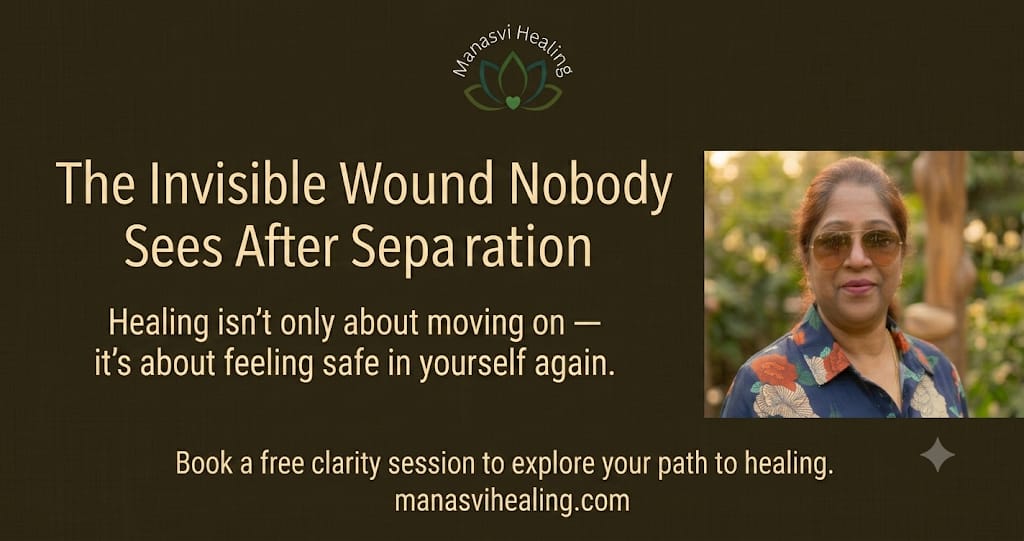
Healing isn’t only about moving on. It’s about feeling safe in yourself again.
When people talk about separation, they often focus on the visible changes.
The legal process.
The living arrangements.
The children’s schedule.
The finances.
The “new beginning.”
But there is another side of separation that rarely gets spoken about with the depth it deserves: the invisible wound it leaves behind.
It is the wound no one can see when you show up to work, reply to messages, pack lunchboxes, smile at relatives, or tell people, “I’m doing okay.”
It is the wound that lives beneath the surface, in the body, in the nervous system, in the identity, in the quiet moments when the world goes still and the truth becomes harder to outrun.
Because separation does not only end a relationship. For many women, it shakes the very foundation of emotional safety.
And that is why healing after separation is not only about “moving on.” It is about feeling safe in yourself again. This is the heart of what I call Release. Rise. Re-identify.
Most people assume the pain of separation is simply about missing a partner, grieving a marriage, or adjusting to life alone. And yes, those are real parts of the journey.
But for many women, especially those who spent years emotionally adapting, over-functioning, suppressing themselves, or trying to hold a family together, the deeper wound is not just heartbreak.
It is the collapse of what once felt familiar.
Even if the relationship was painful, even if it was lonely, even if it was emotionally draining, it was still known. It was still a structure your mind and body had adapted to. You knew the patterns. You knew the roles. You knew how to survive inside it.
When that structure breaks, something deeper often happens: your nervous system no longer knows where “safe” is.
And that can feel terrifying.
After separation, many women tell themselves they should feel relieved. And sometimes they do. There may be freedom, peace, or even gratitude that something painful has ended.
But relief and grief can exist together. Freedom and fear can exist together. Strength and emotional collapse can exist together.
You can know that leaving was right for you and still feel deeply unsteady inside.
That is because separation can disrupt multiple layers of your internal world all at once:
So even when the separation was necessary, your body may still respond as if the ground beneath you has disappeared.
This is the invisible wound nobody sees.
One of the most confusing parts of post separation healing is this: life may have changed on the outside, but your body may still be living in the old emotional reality.
You may notice that you are constantly on edge.
You struggle to sleep even though the house is quiet.
You replay conversations in your mind.
You overthink simple decisions.
You feel guilty when you rest.
You panic when you don’t receive a reply.
You feel emotionally numb one day and overwhelmed the next.
This is not weakness. It is not “overreacting.” It is not proof that you are not coping.
Often, it is a sign that your nervous system has not yet learned that the danger is over.
If you spent years walking on eggshells, managing conflict, bracing for criticism, suppressing your needs, or emotionally carrying the relationship, your body may have become wired for hypervigilance. That means even after separation, it continues to scan for threat.
So while others may say, “Just move on,” your system is still asking a much deeper question:
Am I safe now?
We talk a lot about closure after separation. We talk about confidence, co-parenting, dating again, and rebuilding life.
But we do not talk enough about emotional safety.
Emotional safety is the felt sense that you can exist without fear of attack, abandonment, criticism, control, or emotional unpredictability. It is the feeling that you do not have to constantly monitor someone else’s mood in order to stay okay. It is the ability to rest in your own body without being on guard.
For women healing after separation, emotional safety often becomes the real work.
Because if you do not feel safe inside yourself, it becomes difficult to trust your decisions, trust other people, trust rest, trust joy, or trust the future.
You may look “functional” from the outside and still feel deeply unsafe within.
That is why healing is not simply about starting over. It is about rebuilding your internal sense of security, slowly, gently, and truthfully.
Sometimes the pain of separation doesn’t look dramatic. It looks subtle. Quiet. Hidden. Even high functioning.
It may look like:
This is one of the hardest parts of invisible pain: when it does not look dramatic enough to be understood by others, you can start invalidating it yourself.
But invisible does not mean insignificant. Hidden does not mean healed.
Many women think healing means getting to a point where they no longer feel angry, sad, triggered, confused, or affected by what happened.
But healing is rarely that neat.
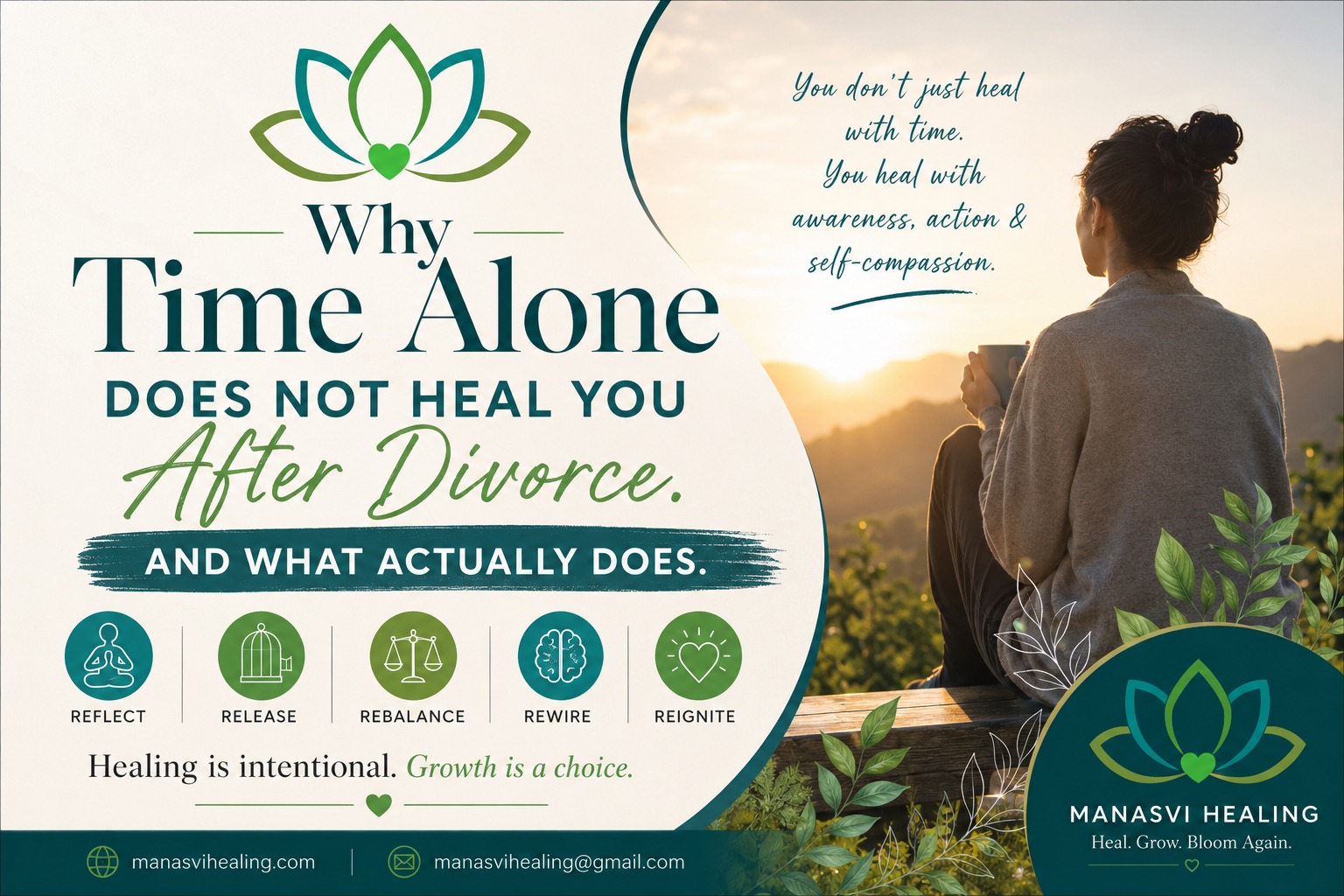
In my work with separated and divorced women, I’ve come to see healing as a sequence rather than a single moment. You have to reflect honestly on what actually happened inside you, not just around you. You have to release what the body has been holding, because insight alone does not move stored emotion. Only once that release has happened can you rebalance your sense of self, rewire the beliefs and patterns that kept you small or hypervigilant, and reignite a life that feels like yours again.
Skipping straight to “moving forward” without releasing what is underneath is often why women feel like they are healing on the surface while still bracing underneath.
It is learning to listen to your body instead of abandoning it.
It is learning to recognise what feels safe and what does not.
It is learning that your needs are not too much.
It is learning to rest without earning it.
It is learning to trust your own inner voice after years of second guessing it.
Most importantly, it is learning that safety is not something you have to beg for from the outside. It is something you can begin to rebuild within.
Healing does not always arrive in dramatic breakthroughs. Often, it returns quietly.
It looks like noticing that your shoulders are not clenched all day.
It looks like sleeping through the night without waking in panic.
It looks like saying no without spiralling into guilt.
It looks like enjoying a peaceful moment without waiting for it to be interrupted.
It looks like trusting your own perception when something feels wrong.
It looks like feeling sadness without being swallowed by it.
It looks like making a decision without needing ten people to validate it.
It looks like hearing your own voice again, and believing it.
This is the kind of healing that changes everything.
Not because it makes the past disappear, but because it gives you your inner ground back. This is what I call becoming a Manasvik Woman: grounded, present, and no longer at war with yourself.
After separation, people often encourage women to distract themselves. Join a class. Keep busy. Focus on work. Travel. Socialise. Start fresh.
And while new experiences can absolutely support healing, busyness is not the same as repair.
You can fill every hour of your week and still feel unsafe when the day ends.
Real healing asks for something deeper than distraction. It asks for compassion, nervous system repair, honest grief, and a willingness to turn toward the parts of yourself that learned to survive by staying silent, small, or self-abandoning.
It asks you to stop measuring your healing by how productive you are, and start measuring it by how safe, honest, and connected you feel within yourself.
If you are navigating separation and carrying a pain that others do not fully see, please know this:
You do not have to justify the depth of your wound because it is invisible.
You do not have to “move on” on someone else’s timeline.
You do not have to be endlessly strong to be worthy of support.
And you do not have to rush into reinvention while your heart and body are still asking for steadiness.
Sometimes healing looks like getting out of bed and choosing gentleness over self criticism.
Sometimes it looks like saying, “I am not okay yet, but I am listening to what I need.”
Sometimes it looks like learning to sit in your own company without fear.
Sometimes it looks like finally admitting that what happened affected you more deeply than anyone knew.
That honesty is not weakness. It is the beginning of repair.
What if healing after separation was not about proving how quickly you can recover?
What if it was about returning to yourself with honesty?
What if it was about creating a life where your body does not have to stay on alert? Where your emotions are not dismissed? Where your boundaries are not punished? Where your voice is not minimised? Where peace does not feel unfamiliar? Where love no longer requires self abandonment?
That is the deeper invitation of healing.
Not just to survive separation. But to become a place of safety for yourself again.
The invisible wound after separation is real. Even when others cannot see it. Even when life looks “fine” from the outside. Even when you are functioning, coping, parenting, working, and carrying on.
Because healing after separation is not only about leaving a relationship behind.
It is about tending to the parts of you that lost safety, lost trust, lost steadiness, and lost home within yourself.
And the path forward is not always fast. It is not always linear. But it is possible.
Little by little, breath by breath, boundary by boundary, truth by truth, you can rebuild a relationship with yourself that feels safer than the one you had to leave behind.
And sometimes, that is the most profound form of healing of all.
If this is where you are, this is exactly the work we do inside Manasvi Healing. Reflect, Release, Rebalance, Rewire, Reignite: a path back to feeling safe in yourself again.